Understanding X-Ray Baggage Scanners in Kenya: How They Improve Security in Public and Private Facilities
X-ray baggage scanners have become an important part of modern security infrastructure across Kenya. They are widely used in airports, government institutions, commercial buildings, hospitals, schools, hotels, shopping malls, logistics facilities, and industrial sites to help security personnel inspect bags and parcels without opening them.
As security challenges continue to evolve, organizations are increasingly adopting advanced screening technologies to protect people, property, and critical infrastructure. X-ray baggage scanners provide a non-invasive method of detecting prohibited or suspicious items while allowing the smooth movement of visitors and staff.
What Is an X-Ray Baggage Scanner?
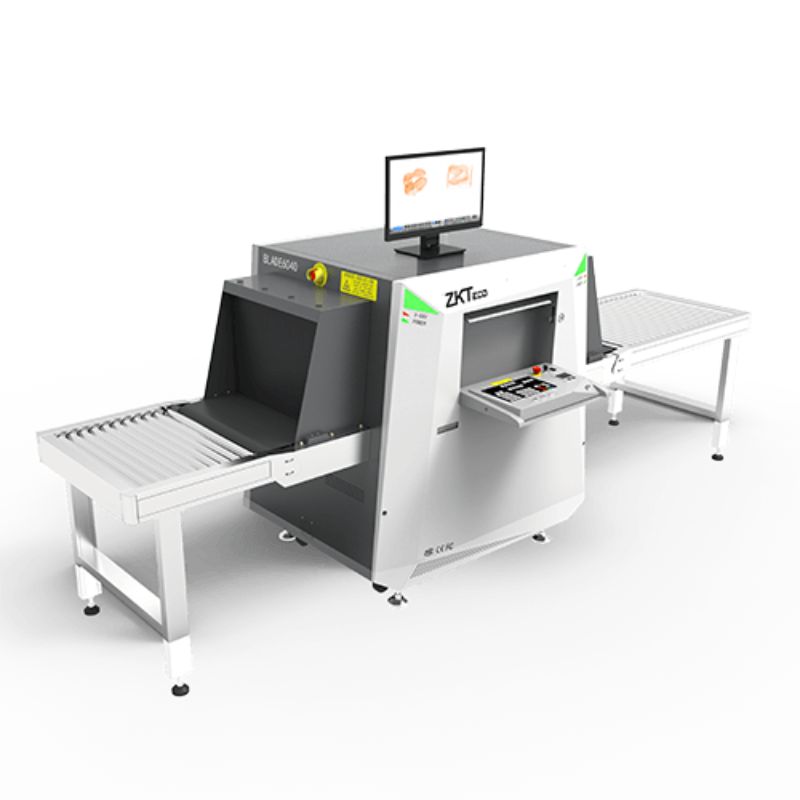
An X-ray baggage scanner is a security screening system that uses low-dose X-ray technology to create images of the contents inside luggage, backpacks, handbags, cartons, parcels, and other items.
Instead of manually opening every bag, security officers can quickly examine its contents on a high-resolution monitor. Different materials are displayed using different colors, making it easier to distinguish between:
- Organic materials
- Metals
- Plastics
- Electronics
- Liquids
- Mixed-density objects
This improves both security and operational efficiency.
How X-Ray Baggage Scanners Work
When a bag is placed on the conveyor belt, it passes through an enclosed X-ray tunnel.
Inside the tunnel:
- The X-ray generator emits a controlled beam.
- The beam passes through the baggage.
- Different materials absorb X-rays differently.
- Sensors capture the transmitted energy.
- Software converts the data into a color-coded image displayed on the operator’s screen.
Modern systems also include advanced image enhancement tools that help operators inspect complex items more effectively.
Common Places Where X-Ray Scanners Are Used in Kenya
Across Kenya, X-ray baggage scanners are commonly deployed in:
- Airports
- Government offices
- Embassies
- Hotels
- Shopping malls
- Hospitals
- Universities
- Schools
- Courts
- Correctional facilities
- Corporate headquarters
- Manufacturing plants
- Logistics warehouses
- Event venues
- Ports and border entry points
Each installation is selected based on the expected traffic volume, available space, and operational requirements.
Types of X-Ray Baggage Scanners
Several sizes are available depending on the intended application.
Small Tunnel Scanners
Suitable for:
- Office entrances
- Schools
- Hotels
- Small government offices
These units inspect handbags, backpacks, and small parcels.
Medium Tunnel Scanners
Often installed in:
- Commercial buildings
- Hospitals
- Shopping centres
They accommodate larger bags and cartons while maintaining a compact footprint.
Large Tunnel Scanners
Designed for:
- Airports
- Cargo facilities
- Logistics centres
- Industrial facilities
These systems can inspect oversized luggage and freight items.
Key Features of Modern X-Ray Baggage Scanners
Today’s systems often include features such as:
- High-resolution image display
- Dual-energy imaging
- Material discrimination
- Image zoom
- Image enhancement
- Organic and inorganic colour separation
- Threat image projection (training)
- Automatic diagnostics
- Multi-language interface
- Image storage
- Network connectivity
- User access management
- Conveyor speed control
The exact features vary depending on the manufacturer and model.
Benefits of Using X-Ray Baggage Scanners
Organizations choose X-ray baggage scanners because they can:
- Improve access control procedures.
- Reduce the need for manual bag searches.
- Increase visitor throughput.
- Enhance security screening.
- Assist trained operators in identifying suspicious items.
- Support compliance with organizational security policies.
- Improve the overall visitor experience through faster screening.
Integration with Other Security Systems
X-ray baggage scanners are often installed alongside:
- Walk-through metal detectors
- Handheld metal detectors
- Turnstiles
- Access control systems
- CCTV surveillance
- Visitor management systems
- Vehicle barrier systems
Integrating these technologies creates a layered approach to physical security.
Operator Training
Effective use of an X-ray baggage scanner depends on trained personnel.
Training typically covers:
- Equipment operation
- Image interpretation
- Routine maintenance
- Emergency procedures
- Operational safety
- Daily inspection routines
Well-trained operators are better equipped to identify unusual or suspicious items while minimizing delays.
Maintenance Considerations
Routine maintenance helps ensure reliable performance.
Typical maintenance activities include:
- Cleaning conveyor belts
- Checking safety interlocks
- Inspecting rollers
- Verifying image quality
- Software updates
- Performance testing
- Preventive servicing by qualified technicians
Following the manufacturer’s maintenance schedule can extend the equipment’s operational life.
Safety
Modern baggage scanners are designed with multiple safety features, including:
- Shielded inspection tunnels
- Interlocked access panels
- Emergency stop buttons
- Radiation leakage protection
- Compliance with applicable safety standards
When installed, operated, and maintained according to the manufacturer’s instructions and relevant regulations, they are intended for routine security screening environments.
Choosing the Right Scanner
Factors to consider include:
| Consideration | Why It Matters |
|---|---|
| Tunnel size | Determines the maximum baggage dimensions. |
| Daily traffic | Influences required throughput. |
| Image quality | Affects the ability to inspect bag contents. |
| Available space | Ensures the system fits the installation area. |
| Integration | Compatibility with existing security infrastructure. |
| Service support | Availability of maintenance and spare parts. |
Selecting equipment should involve a professional security assessment to match operational needs.
Conclusion
X-ray baggage scanners play an important role in enhancing security across many sectors in Kenya. By allowing trained operators to inspect baggage quickly and non-invasively, they support safer environments while improving the efficiency of access screening processes.
Organizations considering security upgrades should evaluate their operational requirements, available space, expected visitor volumes, and integration needs before selecting an appropriate screening solution. A comprehensive security strategy often combines baggage screening with access control, surveillance, and trained personnel to provide effective protection for people and facilities.
Frequently Asked Questions
1. Are X-ray baggage scanners safe?
Modern baggage scanners are designed with shielding and safety features intended to keep radiation exposure outside the equipment within applicable regulatory limits when used correctly.
2. Can an X-ray baggage scanner detect every prohibited item?
No. X-ray scanners are tools that assist trained operators by providing images of bag contents. Their effectiveness depends on equipment capability, image quality, and operator training.
3. Where are X-ray baggage scanners commonly installed?
They are commonly used in airports, government facilities, hotels, hospitals, schools, shopping malls, logistics centres, and other locations where baggage screening is part of security procedures.
4. Do X-ray baggage scanners require regular maintenance?
Yes. Preventive maintenance, cleaning, inspections, and periodic servicing help maintain reliable performance and image quality.
5. Can X-ray baggage scanners work with other security systems?
Yes. They are frequently integrated with metal detectors, CCTV, access control systems, visitor management systems, and turnstiles as part of a broader physical security solution.

How Much Does It Cost to Install an Automatic Gate in Kenya?
Automatic gates have become increasingly popular in Kenya over the past decade, as homeowners, businesses, and institutions seek a combination of security, convenience, and modern aesthetics. With rising security concerns and the desire for smart [...]

Sliding Gate Maintenance in Kenya
Sliding gate automation has become a critical part of residential, commercial, and industrial security systems in Kenya. While choosing a high-quality motor like Centurion, NICE, or Hansa is essential, proper maintenance is what determines whether [...]

Swing and Sliding Gate Automation in Kenya Using Centurion Systems
Security, convenience, and controlled access are key considerations for many property owners in Kenya. Whether you manage a family home, a gated estate, a commercial property, or a small industrial site, automating your entrance gate [...]

Swing gate automation using Centurion’s Vantage Smart
Swing gate automation has become increasingly popular across residential, commercial, and institutional properties in Kenya. Automated swing gates improve access control, reduce the need for manual operation, and enhance overall security. Centurion’s Vantage Smart Swing [...]