Solar-Powered Gate Automation — How It Works and Why It Matters
If you’ve ever been stuck outside your own gate during a KPLC outage, fumbling for the manual release key in the dark, you already understand why solar gate automation exists. Here’s how it actually works, and what’s really in a solar gate kit.
The problem it solves
Every properly installed automatic gate in Kenya should already include battery backup as standard — that’s what keeps the gate working through a typical outage. But a standard battery is a buffer, not a power source: it eventually runs flat if the grid stays down long enough, or if your gate cycles frequently during the outage. A solar kit solves this differently — instead of just storing grid power for later, it generates its own power continuously, so the gate keeps working for as long as the sun keeps rising, regardless of what KPLC is doing.
Dealing with an area that loses power often, or no reliable grid connection at all? Call or WhatsApp us on +254 722 708034 and we’ll talk through whether a solar kit makes sense for your situation.
What’s actually in a solar gate kit
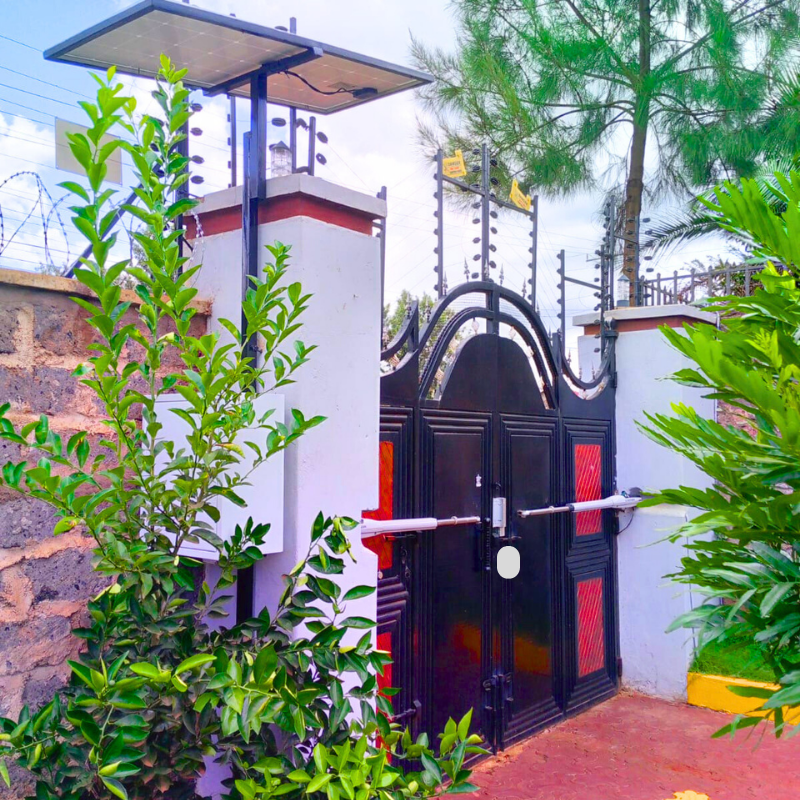
A typical solar power kit for gate automation includes a solar panel (commonly around 250W for residential use), a dedicated battery, and a charge controller that manages charging and protects the battery from overcharge. It connects into your gate’s existing control system, topping up the battery continuously through daylight hours rather than relying solely on the grid.
This is a genuinely different thing from the standard battery backup every gate system already includes — think of standard backup as a buffer that eventually runs out, and a solar kit as a way of making sure it never has to.
Who actually needs this
Properties with frequent or extended outages. If blackouts in your area regularly run several hours or longer, a standard battery backup alone may not reliably carry your gate through every outage — a solar kit removes that uncertainty entirely.
Rural and off-grid properties. Farms, ranches, and rural homes without a reliable grid connection at all are the clearest case for solar — the gate simply isn’t dependent on KPLC to begin with.
High-usage gates. A gate that cycles frequently throughout the day (an estate entrance, a commercial site) drains standard battery backup faster during an outage than a lightly used residential gate — solar keeps that battery topped up regardless of usage.
Properties where the gate is genuinely critical. If losing gate access even briefly is a real security or operational problem — not just an inconvenience — solar removes one more point of failure from the system.
Not sure if your situation genuinely needs solar, or if standard battery backup is already enough? Email info@automaticgates.co.ke with a bit about your area’s power reliability and gate usage, and we’ll give you a straight answer rather than upsell you on something you don’t need.
Does it work on both gate types?
Yes — solar kits integrate with both sliding and swing gate automation systems, and with both Centurion and Nice Hansa motors, since the kit works at the power-supply level rather than needing to be matched to a specific motor type. If you already have an automated gate without solar, in most cases a kit can be retrofitted rather than requiring you to replace the whole system.
What it actually costs
A solar power kit — panel, battery, and controller — is typically an additional cost on top of your base gate automation system, rather than a separate standalone purchase, since it integrates directly into your existing or new gate’s electrical setup. We quote it as a line item alongside your gate motor and installation, so you see the full, combined cost upfront rather than two separate invoices.
Want a combined quote for a new gate system with solar included from the start? Use our instant quote tool and add the solar kit as an option, or call +254 722 708034 for a detailed quote.
A genuinely common question: does it need direct sunlight constantly?
No — the panel charges the battery throughout daylight hours, including on overcast days, just at a reduced rate compared to full sun. Kenya’s generally strong solar resource means most properties get sufficient charging even through cloudier stretches, and the battery buffer absorbs normal day-to-day variation in charging without you noticing any difference in gate performance.
Our honest take
For a property with occasional, short outages, standard battery backup — which comes with every system we install — is genuinely sufficient, and solar is a nice-to-have rather than a necessity. For anywhere dealing with frequent, extended, or unpredictable power cuts, or anywhere off-grid entirely, we’d actively recommend it — it’s the difference between hoping your battery lasts through the next outage and simply not having to think about it.
Get in touch or call +254 722 708034 for a free site assessment — we’ll tell you honestly whether solar makes sense for your property’s specific power situation.

Full Height Turnstiles in Kenya
Managing pedestrian access is an important part of physical security for many facilities in Kenya. Full height turnstiles are one option used to regulate entry and exit at sites where controlled access is required. Their [...]

Understanding X-Ray Baggage Scanners in Kenya: How They Improve Security in Public and Private Facilities
X-ray baggage scanners have become an important part of modern security infrastructure across Kenya. They are widely used in airports, government institutions, commercial buildings, hospitals, schools, hotels, shopping malls, logistics facilities, and industrial sites to [...]

ZKTeco Full Height Turnstile in Kenya
Modern organizations require more than ordinary gates and security guards to protect their premises. Facilities such as factories, embassies, government institutions, power plants, warehouses, airports, data centres, and industrial parks require controlled pedestrian access that [...]
ZKTeco ML100 Fingerprint Door Lock in Kenya
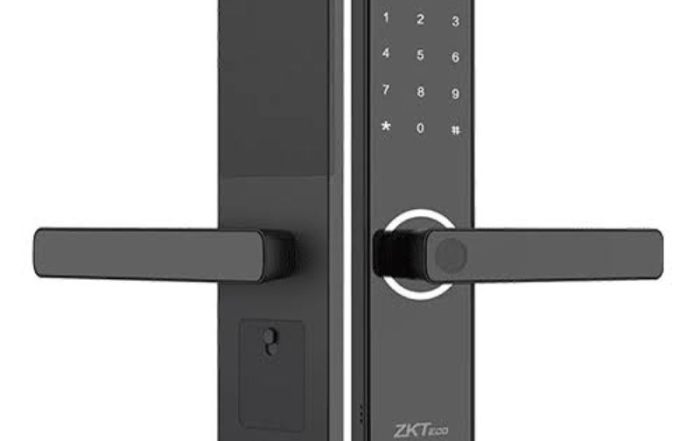
The demand for smart door locks in Kenya has grown rapidly as homeowners, businesses, property developers, and Airbnb hosts seek more secure and convenient alternatives to traditional keys. Conventional locks can be lost, duplicated, or [...]